What equipment is covered by LOLER? See examples of lifting equipment, accessories and machinery included or excluded from the regulations.
What equipment is covered by LOLER? The Lifting Operations and Lifting Equipment Regulations 1998 apply to work equipment used for lifting or lowering loads, including people. They also cover lifting accessories and attachments used to anchor, fix or support lifting equipment.
Common examples include passenger lifts, cranes, hoists, fork-lift trucks, MEWPs, vehicle lifts, excavators used for lifting, tail lifts, patient hoists, lifting beams, chains, slings and shackles.
However, not every machine that raises, lowers or transports something falls within LOLER. Escalators, moving walkways, many conveyor systems and simple pallet trucks are generally outside LOLER, although other legislation such as PUWER will still apply.
The correct classification depends on the equipment’s function and how it is actually used, not merely its name.
What equipment is covered by LOLER under UK law?
LOLER applies to lifting equipment used at work.
Lifting equipment means work equipment used for lifting or lowering loads. A load can be:
-
Materials
-
Machinery
-
Products
-
Containers
-
Vehicles
-
Animals
-
A person
-
Several people
-
Another item being raised or lowered
The regulations also cover accessories used to connect the load to the lifting machine and attachments used for anchoring, fixing or supporting the equipment.
Equipment commonly covered by LOLER includes:
Equipment categoryExamplesFixed lifting equipmentPassenger lifts, goods lifts, platform lifts and fixed hoistsCranesMobile cranes, overhead cranes, tower cranes, gantry cranes and loader cranesMobile plantFork-lift trucks, telehandlers and excavators used for liftingAccess equipmentMEWPs, scissor lifts, boom lifts and personnel hoistsWorkshop equipmentVehicle lifts, engine hoists and lifting tablesVehicle-mounted equipmentTail lifts, vehicle-mounted cranes and recovery lifting equipmentHealthcare equipmentPatient hoists and certain lifting platformsManual lifting equipmentChain blocks, lever hoists and suitable jacksLifting accessoriesSlings, shackles, hooks, eyebolts and lifting beamsSpecialist attachmentsMagnets, vacuum lifters, grabs, clamps and lifting frames
The Health and Safety Executive’s current LOLER overview explains that the regulations apply to people and organisations that own, operate or control lifting equipment used at work.
Excel Inspection Solutions provides independent LOLER thorough examinations for a wide range of lifting equipment across the South East and wider UK.
What is a lifting operation?
A lifting operation is an operation concerned with lifting or lowering a load.
The movement does not need to cover a large vertical distance. Equipment may still fall within LOLER where it raises a load only far enough to:
-
Clear an obstruction
-
Position it for work
-
Load or unload a vehicle
-
Suspend it
-
Transfer it between levels
-
Allow maintenance underneath
-
Place it onto another surface
The operation can involve powered or manually operated equipment.
A manually operated chain block does not fall outside LOLER simply because it has no motor. Similarly, equipment does not become exempt because it is used infrequently.
Does LOLER apply only to cranes and passenger lifts?
No.
Cranes and lifts are among the most recognisable examples, but LOLER has a much wider scope.
It can apply to small or relatively simple items such as:
-
A manual chain block
-
An engine crane
-
A vehicle jack used as part of a work activity
-
A lifting eye
-
A shackle
-
A webbing sling
-
A pallet lifting attachment
-
A patient hoist
Businesses sometimes identify their large lifting machines but overlook smaller equipment stored in workshops, vehicles and site containers.
A complete LOLER register should include both lifting machines and separately identifiable lifting accessories.
Are passenger lifts covered by LOLER?
Passenger lifts used at work are generally covered.
This can include lifts in:
-
Offices
-
Hotels
-
Factories
-
Warehouses
-
Hospitals
-
Care homes
-
Schools
-
Residential buildings with employees
-
Shopping centres
-
Public buildings
-
Other managed premises
A passenger lift used at work will normally require thorough examination every six months unless a suitable examination scheme specifies different intervals.
The lift also requires appropriate servicing and maintenance. Thorough examination does not replace maintenance, and maintenance does not replace thorough examination.
The precise legal position can depend on how the lift is used and who may be at work in relation to it. Even where a lift is used primarily by members of the public, employers and property controllers can retain broader health and safety responsibilities.
Are goods lifts covered?
Goods lifts used at work are generally covered by LOLER.
Examples include:
-
Goods-only lifts
-
Service lifts
-
Dumb waiters
-
Trolley lifts
-
Kitchen lifts
-
Warehouse goods lifts
-
Industrial platform lifts
-
Mezzanine goods lifts
A goods-only lift will normally be thoroughly examined every 12 months unless it is covered by an examination scheme.
If people travel in a goods lift, even occasionally, the duty holder must address the people-lifting requirements. A sign stating “goods only” is not enough if employees routinely ride in the carrier.
Combined passenger-and-goods lifts normally fall within the six-month people-lifting interval.
Are platform lifts and stairlifts covered?
They can be.
The answer depends partly on whether the equipment is used at work.
A platform lift used by employees or provided in a workplace may fall within LOLER. A stairlift installed solely in a private home for domestic use would not normally be work equipment and would therefore sit outside LOLER.
The position can be less straightforward in publicly accessible premises. Equipment may be used mainly by customers while employees, maintenance contractors and other workers also interact with it.
Even where LOLER does not apply directly, duties under the Health and Safety at Work etc. Act, product-safety legislation and other requirements may still mean that an equivalent standard of inspection and maintenance is appropriate.
The absence of a direct LOLER duty should not be interpreted as permission to leave accessibility equipment unexamined.
Are cranes covered by LOLER?
Yes. Cranes used at work are lifting equipment.
Examples include:
-
Mobile cranes
-
Crawler cranes
-
Tower cranes
-
Overhead travelling cranes
-
Gantry cranes
-
Jib cranes
-
Loader cranes
-
Vehicle-mounted cranes
-
Pedestal cranes
-
Workshop cranes
-
Portable gantries
The crane, its lifting accessories and certain associated safety systems may have different examination requirements.
A crane used only for lifting materials will normally have a 12-month thorough examination interval unless an examination scheme applies. If it is used to lift people, the six-month people-lifting interval and additional safeguards must be considered.
Accessories such as chains, slings, shackles and lifting beams normally require examination every six months.
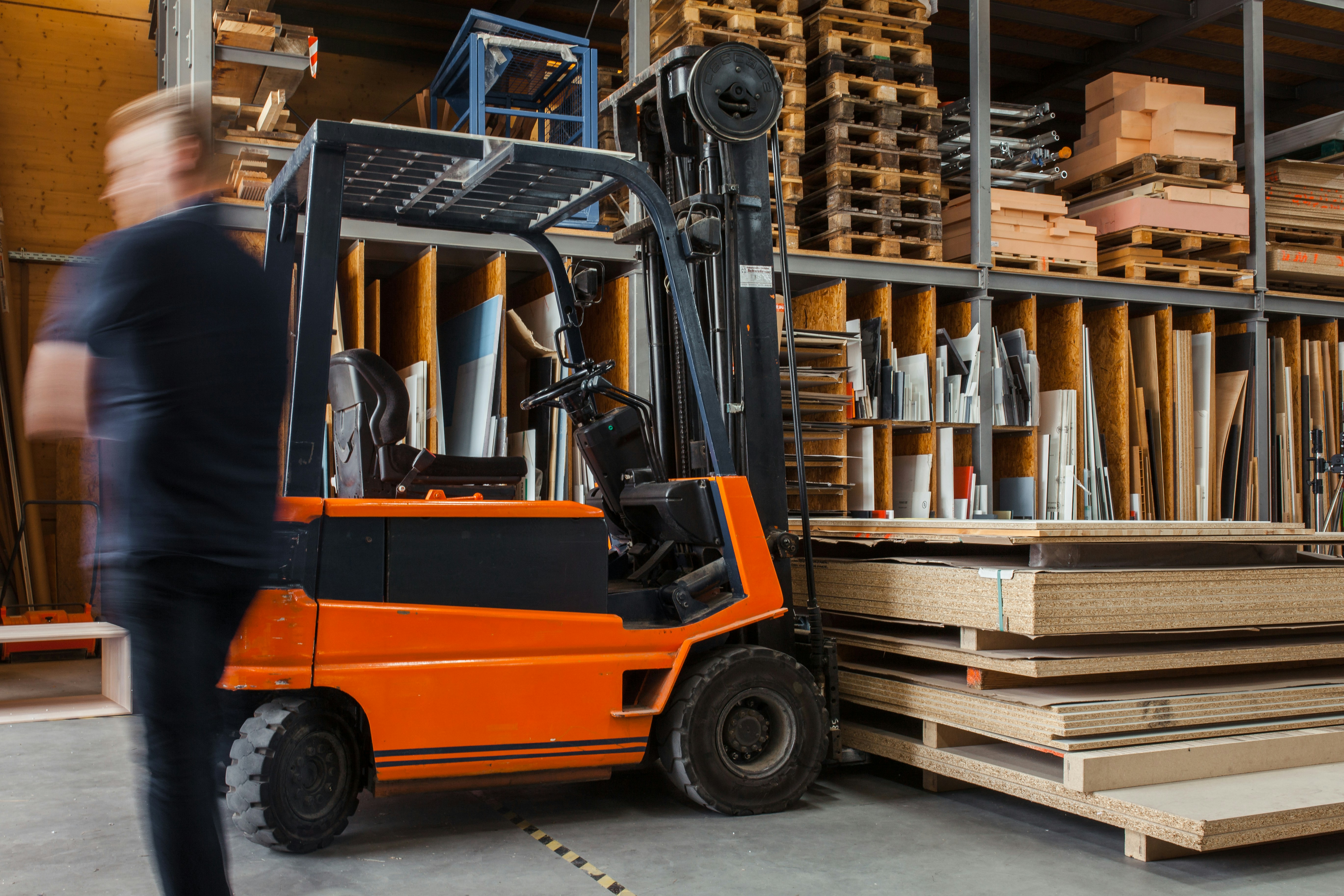
Are fork-lift trucks covered by LOLER?
The lifting parts of a fork-lift truck are generally subject to LOLER when the truck is used at work.
Relevant components may include:
-
Mast
-
Fork carriage
-
Chains
-
Fork arms
-
Hydraulic lifting system
-
Load-bearing components
-
Attachments
-
Associated safety devices
Other aspects of the truck fall under PUWER rather than LOLER. This can include steering, brakes, tyres, operator protection and general vehicle condition.
A complete compliance arrangement may therefore include both:
-
A LOLER thorough examination of the lifting parts
-
An appropriate PUWER inspection of the remainder of the truck
A service does not automatically satisfy either statutory assessment. The documentation should make clear what was examined and under which requirements.
Fork-lift trucks used only to lift materials are normally examined under LOLER every 12 months unless an examination scheme specifies otherwise.
Are telehandlers covered?
Yes, where they are used to lift or lower loads.
The scope may include:
-
Boom structure
-
Lifting mechanisms
-
Load-bearing pins
-
Hydraulic load-holding systems
-
Fork carriage
-
Forks
-
Rated-capacity systems
-
Lifting attachments
-
Associated safety devices
The examination must reflect the telehandler’s actual configurations and attachments.
A report covering the machine with forks fitted should not automatically be assumed to cover a crane hook, lifting jib, platform or other attachment.
If a telehandler is used to lift people, the people-lifting requirements apply to the relevant arrangement. Purpose-designed access equipment should normally be used instead wherever reasonably practicable.
Are excavators covered by LOLER?
An excavator is subject to LOLER when it is used for lifting.
This commonly occurs where an excavator lifts:
-
Pipes
-
Manhole rings
-
Trench boxes
-
Concrete products
-
Pumps
-
Construction materials
-
Suspended loads
The LOLER examination should address the components relevant to lifting, which may include:
-
Boom and dipper structure
-
Pins and bushes
-
Hydraulic load-holding arrangements
-
Rated-capacity or warning systems
-
Lifting points
-
Quick hitches
-
Lifting accessories
-
Other safety-related components
An ordinary earthmoving inspection should not be assumed to cover lifting duties.
The machine must also be suitable for the intended lift, properly configured and used in accordance with an appropriate lifting plan.
Are MEWPs covered?
Yes. Mobile elevating work platforms lift people and are therefore subject to the people-lifting requirements.
Examples include:
-
Scissor lifts
-
Articulating boom lifts
-
Telescopic boom lifts
-
Vertical mast lifts
-
Trailer-mounted platforms
-
Vehicle-mounted access platforms
MEWPs normally require thorough examination every six months unless covered by a suitable examination scheme.
They also require:
-
Pre-use checks
-
Planned maintenance
-
Trained operators
-
Suitable ground conditions
-
Correct positioning
-
Emergency-lowering arrangements
-
An appropriate rescue plan
-
Proper planning and supervision
A current examination report does not confirm that a MEWP is suitable for a particular site, ground condition or access task.
EIS provides dedicated MEWP LOLER inspections.
Are vehicle lifts covered?
Yes. Vehicle lifts used at work are lifting equipment.
Examples include:
-
Two-post lifts
-
Four-post lifts
-
Scissor lifts
-
Mobile column lifts
-
In-ground lifts
-
Motorcycle lifts
-
Vehicle inspection lifts
A vehicle is the load, even where no person travels on the lift during normal operation.
Vehicle lifts will normally require thorough examination every 12 months unless an examination scheme specifies otherwise.
The examination may consider:
-
Load-bearing structures
-
Arms and pads
-
Locking devices
-
Synchronisation
-
Chains, ropes or screws
-
Hydraulic systems
-
Safety catches
-
Controls
-
Anchorage
-
Wear, corrosion or deformation
Routine servicing remains necessary and should be carried out separately from the independent thorough examination.
Are tail lifts covered by LOLER?
Yes. A tail lift used for loading or unloading goods is lifting equipment.
A tail lift used only for goods will normally have a 12-month LOLER thorough examination interval unless an examination scheme applies.
The vehicle itself remains subject to separate roadworthiness and maintenance requirements. A vehicle inspection or MOT does not replace the tail lift’s LOLER examination.
Relevant areas may include:
-
Platform
-
Lifting arms
-
Pins and pivots
-
Hydraulic cylinders
-
Hoses
-
Load-holding systems
-
Controls
-
Safety devices
-
Anchorage to the vehicle
-
Working-load markings
If people are intentionally lifted on the platform, the suitability of the equipment and people-lifting requirements must be considered.
Are patient hoists covered?
Patient hoists used at work are generally lifting equipment used to lift people.
They normally require thorough examination every six months unless covered by an examination scheme.
This can include:
-
Mobile patient hoists
-
Overhead tracking hoists
-
Bath hoists
-
Pool hoists
-
Standing aids that lift or support a person
-
Other patient-transfer lifting equipment
Slings used with patient hoists are lifting accessories and should be controlled accordingly.
The hoist and sling must be compatible. An in-date sling should not be used simply because it can be physically attached to the hoist.
Pre-use checks, safe transfer planning, user assessment, maintenance and staff training are also required.
Are jacks covered by LOLER?
Some jacks used at work can fall within LOLER because they lift or lower loads.
Examples may include:
-
Trolley jacks
-
Bottle jacks
-
Rail jacks
-
Cable-drum jacks
-
Machinery jacks
-
Manually operated car jacks
The application depends on the equipment and work activity.
A jack should not be relied upon as the sole means of supporting a load while someone works underneath it. Suitable stands, supports or other protective arrangements will normally be required.
The assessment should consider the jack’s lifting function as well as the wider requirements of PUWER and the safe system of work.
Are lifting accessories covered separately?
Yes. Lifting accessories are explicitly included within LOLER.
Examples include:
-
Chain slings
-
Wire-rope slings
-
Webbing slings
-
Round slings
-
Shackles
-
Hooks
-
Eyebolts
-
Hoist rings
-
Lifting beams
-
Spreader beams
-
Plate clamps
-
Beam clamps
-
Lifting grabs
-
Magnets
-
Vacuum lifting devices
-
Special lifting frames
All lifting accessories normally require thorough examination every six months unless they are examined under a suitable examination scheme.
They should be identifiable and traceable to their examination records. Users should also complete appropriate checks before use.
Read more in EIS’s guide, When Should Lifting Accessories Be Inspected?.
Does LOLER apply to manually operated equipment?
Yes, where the equipment meets the definition of lifting equipment used at work.
LOLER is not limited to powered machinery.
It can apply to:
-
Manual chain blocks
-
Lever hoists
-
Hand-operated winches
-
Manual jacks
-
Hand-powered lifting tables
-
Other manually operated lifting devices
The fact that movement is produced by direct human effort does not automatically remove the equipment from LOLER.
The duty holder should consider the equipment’s actual function, rather than whether it has an engine, motor or hydraulic power unit.
Does LOLER apply to hired equipment?
Yes. Hired lifting equipment used at work remains subject to LOLER.
The hire company may arrange maintenance and examination, but the user should verify:
-
The equipment is suitable for the intended task
-
Its identity matches the examination report
-
The report is current
-
The relevant configuration is covered
-
Accessories have appropriate records
-
No dangerous defect remains outstanding
-
The equipment has not been damaged in transit
-
Required checks have been completed
-
Responsibilities are clearly allocated
Hiring equipment does not transfer every duty away from the organisation controlling its use.
Contract terms should be checked, but the work should not proceed on the basis of assumptions about who has arranged examination, maintenance or repair.
Does LOLER apply to equipment owned by an employee?
It can.
LOLER duties are not limited to equipment owned by the employer.
If equipment is provided or used for work, the organisation should control its suitability, condition and examination status regardless of who purchased it.
This can apply to:
-
Personal chain blocks
-
Jacks carried in an employee’s vehicle
-
Individually owned lifting accessories
-
Equipment borrowed from another business
-
Equipment supplied by a subcontractor
-
Hired or leased equipment
Allowing unregistered lifting equipment onto a site can create gaps in inspection and traceability.
A business should have a clear policy covering employee-owned, hired and subcontractor-supplied lifting equipment.
What equipment is generally outside LOLER?
Not every item that moves people or goods vertically is classified as lifting equipment under LOLER.
Examples generally outside LOLER can include:
-
Escalators
-
Moving walkways
-
Many conveyor systems
-
Simple pallet trucks that raise a load only enough to move it
-
Equipment used solely for domestic purposes
-
Certain equipment on ships covered by merchant-shipping legislation
These exclusions do not mean the equipment is unregulated.
PUWER may still require the equipment to be:
-
Suitable
-
Maintained
-
Inspected where deterioration could create danger
-
Used by trained people
-
Provided with appropriate controls and safeguards
Other legislation, industry standards and manufacturer requirements may also apply.
The legal classification should be confirmed where equipment has an unusual function or operating arrangement.
Are pallet trucks covered by LOLER?
Simple hand pallet trucks are generally not treated as lifting equipment under LOLER where they raise a pallet only enough to clear the floor for horizontal movement.
However, pallet stackers and other equipment designed to raise loads through a greater vertical distance are more likely to fall within LOLER.
The distinction depends on the equipment’s principal purpose and movement.
Questions to consider include:
-
Does it raise a load for positioning at height?
-
Does it stack goods?
-
Can the load remain elevated?
-
Is lifting a significant part of its function?
-
What does the manufacturer describe as its intended use?
Even where LOLER does not apply, PUWER will normally apply to workplace pallet trucks.
Are escalators covered by LOLER?
Escalators and moving walkways are generally not regarded as lifting equipment under LOLER because they provide continuous transportation rather than lifting or lowering a discrete load in the relevant sense.
They remain subject to other health and safety duties.
Suitable arrangements should still cover:
-
Maintenance
-
Inspection
-
Brakes and stopping systems
-
Comb and landing areas
-
Handrails
-
Controls
-
Guards
-
Emergency stops
-
User safety
-
Contractor access
A passenger lift and an escalator in the same building may therefore sit under different specific regulatory arrangements.
Are conveyors covered by LOLER?
Many conveyor systems are outside LOLER, even where part of the system moves materials between different heights.
They will generally remain subject to PUWER and other relevant requirements.
However, a lifting device incorporated into a wider production or conveyor system may need separate consideration if it performs a distinct lifting operation.
The complete machine should not automatically be placed inside or outside LOLER based only on its general description.
Complex or unusual machinery may require competent assessment to identify which components and activities fall within each regulatory regime.
Does LOLER apply to private domestic equipment?
LOLER applies to lifting equipment used at work.
A stairlift or lifting device used solely within a private home for a domestic purpose would not normally be work equipment.
However, the position can change when people use or interact with the equipment as part of work. Examples could include:
-
Care workers
-
Maintenance engineers
-
Cleaners
-
Installation contractors
-
Property-management employees
-
Other visiting workers
This does not necessarily mean every domestic lift automatically becomes subject to the full LOLER regime. It does mean the relevant work activities and wider health and safety duties should be assessed rather than assuming that no responsibilities exist.
Does public use mean LOLER does not apply?
Not necessarily.
A lift in a shopping centre, hotel, care setting or public building may be used mainly by customers or visitors, but employees and contractors may also use, operate, clean or maintain it.
The legal analysis can depend on the circumstances.
Even where LOLER does not apply directly to every aspect of public use, those controlling premises and work activities retain duties to manage risks. In practice, passenger lifts in publicly accessible commercial buildings should be maintained and examined to a suitably high standard.
An insurer’s inspection requirement may also exist alongside statutory duties, but insurance arrangements do not define the complete legal position.
Does LOLER apply to lifting points and anchorages?
LOLER’s definition includes attachments used for anchoring, fixing or supporting lifting equipment.
This can bring certain lifting points, supporting structures and anchorages within the required safety arrangements.
Examples may include:
-
Runway beams
-
Padeyes
-
Fixed lifting eyes
-
Supporting gantries
-
Hoist anchorages
-
Davit sockets
-
Suspension points
-
Other load-bearing attachments
The examination scope should distinguish between:
-
The lifting machine
-
The lifting accessory
-
The anchorage or supporting structure
-
The building or structure to which it is attached
Different people may be responsible for different elements, but the complete load path must be safe.
Does all equipment covered by LOLER need a thorough examination?
Not every item is examined in precisely the same way or at the same interval, but lifting equipment exposed to deterioration likely to result in danger will generally require thorough examination.
The standard intervals are:
EquipmentStandard intervalLifting equipment used to lift peopleEvery six monthsLifting accessoriesEvery six monthsOther lifting equipmentEvery 12 monthsEquipment under a suitable examination schemeAs specified by the scheme
Additional examination may be needed:
-
Before first use
-
After installation or assembly
-
After reassembly at another location
-
Following damage or failure
-
Following significant alteration
-
After replacement or repair of a critical component
-
Following prolonged inactivity
-
After another exceptional circumstance liable to jeopardise safety
The competent person should determine the necessary scope.
Does a Declaration of Conformity replace LOLER examination?
Not throughout the equipment’s working life.
A valid Declaration of Conformity can affect whether a separate thorough examination is needed before first use in certain circumstances. It does not remove the requirement for future periodic thorough examinations.
The declaration should be retained and matched to the correct item.
It also does not establish that:
-
The equipment remains undamaged
-
It has been installed correctly where safety depends on installation
-
It is suitable for every intended task
-
It has been maintained
-
Its periodic examination remains current
Product conformity, maintenance, pre-use checks and statutory examination are separate parts of the safety system.
Does PUWER apply as well as LOLER?
Usually, yes.
Most lifting equipment is also work equipment, so PUWER will normally apply alongside LOLER.
LOLER focuses particularly on lifting equipment and lifting operations, including:
-
Strength and stability
-
Positioning and installation
-
Risks associated with lifting people
-
Marking
-
Planning and supervision
-
Thorough examination
-
Reporting of defects
PUWER addresses wider work-equipment matters such as:
-
Suitability
-
Maintenance
-
Inspection
-
Controls
-
Guarding
-
Training
-
Information and instructions
-
General safe use
The two regulations complement one another.
A LOLER thorough examination should not be assumed to cover every PUWER matter, and a PUWER inspection does not automatically satisfy LOLER.
EIS explains the distinction in its guide to LOLER and PUWER.
Who decides whether equipment is covered?
The duty holder must ensure that equipment is correctly identified and managed.
Where the position is unclear, advice may be needed from:
-
A competent person carrying out thorough examinations
-
A suitably experienced machinery specialist
-
The manufacturer
-
A competent health and safety adviser
-
An industry body
-
The relevant enforcing authority
The assessment should consider:
-
Is the item work equipment?
-
Is it used for lifting or lowering a load?
-
What is treated as the load?
-
Is lifting a principal or significant function?
-
Is it an accessory or attachment used in lifting?
-
Is it used to lift people?
-
Does another specific legal regime apply?
-
How is the equipment actually used in practice?
A product name alone may not answer these questions.
Common LOLER scope mistakes
Registering only large equipment
Small hoists, jacks and lifting accessories can be overlooked even though their failure could cause serious injury.
Assuming manually operated equipment is exempt
Manual chain blocks, lever hoists and certain jacks can fall within LOLER.
Treating every vertical movement as lifting equipment
Escalators, conveyors and simple pallet trucks may fall outside LOLER while remaining subject to PUWER.
Ignoring mobile-plant lifting duties
Excavators and telehandlers may be used for lifting even though lifting is not their only function.
Examining only the base machine
Attachments, accessories and supporting structures may need separate identification and examination.
Applying one interval to every item
People-lifting equipment and accessories normally require six-monthly examination. Other lifting equipment normally has a 12-month interval unless an examination scheme applies.
Assuming hired equipment is someone else’s responsibility
The user should still verify suitability, condition, documentation and examination status.
Confusing servicing with thorough examination
A maintenance visit does not automatically satisfy LOLER.
Assuming an excluded item needs no inspection
Equipment outside LOLER may still require maintenance and inspection under PUWER or other legislation.
How to create a complete LOLER equipment register
A useful register should record:
-
Unique equipment identification
-
Description
-
Manufacturer
-
Model
-
Serial or asset number
-
Location
-
Owner
-
Responsible department
-
Intended use
-
Whether it lifts people
-
Safe working load
-
Available configurations
-
Attachments and accessories
-
Applicable examination interval
-
Last examination date
-
Next examination date
-
Examination-scheme reference
-
Maintenance responsibility
-
Current operating status
-
Outstanding defects
-
Evidence of completed repairs
The register should include equipment held in:
-
Workshops
-
Warehouses
-
Construction sites
-
Service vehicles
-
Plant compounds
-
Rooftop plant areas
-
Loading bays
-
Care facilities
-
Remote sites
-
Hired-equipment fleets
Periodic audits can identify equipment that has been purchased, moved, modified or brought onto site without being added to the examination programme.
The practical answer
LOLER covers work equipment used for lifting or lowering loads, including people. It also covers lifting accessories and attachments used to anchor, fix or support lifting equipment.
Examples include lifts, cranes, hoists, MEWPs, fork-lift trucks, telehandlers, excavators used for lifting, vehicle lifts, tail lifts, patient hoists, jacks, slings, shackles and lifting beams.
LOLER does not apply to every machine that transports goods or people. Escalators, moving walkways, many conveyors and simple pallet trucks are generally outside its scope, although PUWER and other legal duties may still apply.
The classification should be based on the item’s function and actual use. Where equipment has multiple functions, unusual attachments or an unclear status, the duty holder should obtain competent advice rather than leaving it outside the inspection register by assumption.
Excel Inspection Solutions carries out independent statutory examinations of passenger lifts, lifting machinery, mobile plant and lifting accessories across the South East and wider UK.
To discuss whether particular equipment requires a LOLER thorough examination, call 01634 907073 or email enquiries@eis-uk.com.
Related inspections and services
Need a LOLER inspection?
We provide certified inspections across lifting equipment, cranes and workplace systems.
Request a quote