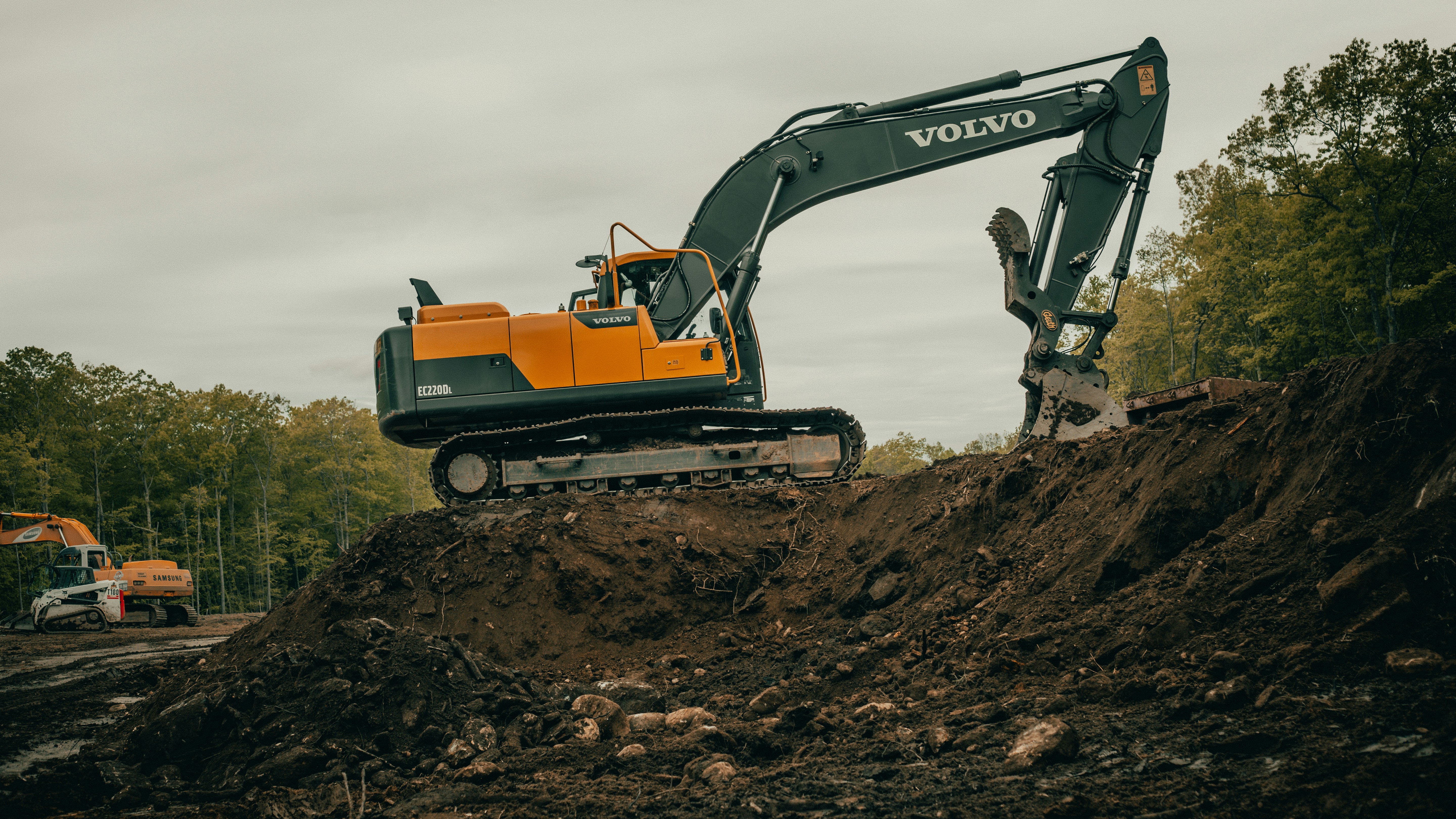
Does an excavator need a LOLER examination? Learn when LOLER applies, the inspection interval and what is required before lifting a load.
Does an excavator need a LOLER thorough examination? Only when it is used for lifting operations. An excavator used solely for conventional earthmoving is not automatically subject to LOLER thorough examination, although it remains subject to other work-equipment safety requirements.
The distinction depends on how the excavator is actually used, not simply what the machine is called.
If an excavator lifts or lowers a suspended load, such as a concrete pipe, manhole ring or construction component, the relevant parts of the machine become lifting equipment for that activity. The Lifting Operations and Lifting Equipment Regulations 1998, known as LOLER, then apply.
Occasional lifting is still lifting. Using an excavator for a lifting operation only a few times a year does not create an exemption.
Does an excavator need a LOLER examination in every case?
No. The Health and Safety Executive states that only excavators used for lifting operations are subject to LOLER thorough examination.
An excavator performing conventional earthmoving tasks would normally be managed under the Provision and Use of Work Equipment Regulations 1998, known as PUWER. These tasks can include:
-
Digging and excavating material
-
Filling a bucket with soil or aggregate
-
Moving excavated material within the bucket
-
Grading and levelling
-
Backfilling
-
Using an appropriate attachment for its intended earthmoving or processing function
This does not mean that an earthmoving-only machine requires no inspection. PUWER requires work equipment to be suitable, maintained in a safe condition and inspected where deterioration could create danger. Daily checks, planned maintenance and appropriate periodic inspections remain necessary.
LOLER becomes relevant when the excavator is used as lifting equipment to lift or lower a load.
When is an excavator carrying out a lifting operation?
LOLER defines a lifting operation as an operation concerned with lifting or lowering a load.
For an excavator, this commonly means a freely suspended load attached to a designated lifting point using equipment such as a chain, sling or shackle.
Examples may include lifting:
-
Concrete pipes
-
Manhole rings
-
Trench boxes
-
Drainage components
-
Construction materials
-
Plant components
-
Other suspended loads
A suspended load behaves differently from material contained within a bucket. It can swing, rotate or move unexpectedly, affecting the stability of the excavator and creating risks to people nearby.
The precise classification of an unusual activity should be assessed by someone with appropriate knowledge of the equipment and operation. Simply referring to an activity as “material handling” does not prevent LOLER from applying when the operation is genuinely concerned with lifting or lowering a load.
The HSE’s guidance on excavators and lifting operations confirms that excavators used for lifting must undergo thorough examination and have the necessary safety devices.
What if the excavator only lifts occasionally?
An occasional lift is not exempt from LOLER.
If a business plans to use an excavator for lifting, the machine must be suitable for the task and subject to the applicable thorough examination requirements. The lifting operation must also be properly planned, appropriately supervised and carried out safely.
This should be addressed before the first lift. A site team should not attach a chain to an earthmoving excavator and assume that the machine is suitable because the load appears light.
Before an excavator is used for lifting, the responsible person should establish:
-
Whether the manufacturer permits the machine to lift suspended loads
-
Whether the proposed configuration is covered by the manufacturer’s instructions
-
Whether the excavator has an appropriate designated lifting point
-
Whether that point is marked with its safe working load
-
Whether the machine has the required safety devices
-
Whether a current thorough examination covers the lifting configuration
-
Whether all lifting accessories have current identification and examination records
-
Whether the lifting operation has been competently planned
-
Whether the operator and others involved are trained and competent
-
Whether ground conditions and the operating environment are suitable
If these matters cannot be confirmed, the lift should not proceed.
How often does an excavator used for lifting need a LOLER examination?
An excavator used for lifting loads will normally require a thorough examination at least every 12 months, unless it is examined in accordance with a suitable examination scheme drawn up by a competent person.
A shorter interval may be appropriate where the machine’s use, environment, condition or risk justifies it. An examination scheme can set intervals for different components based on their likely deterioration and the circumstances in which the excavator operates.
The associated lifting accessories are subject to their own examination requirements. Chains, slings, shackles and similar lifting accessories normally require thorough examination at least every six months unless a suitable examination scheme specifies otherwise.
The excavator and its lifting accessories should not be treated as one record with one universal due date. A compliance register should identify each item and its applicable examination date.
An additional thorough examination may also be required following exceptional circumstances that could jeopardise safety, such as:
-
Damage or failure
-
An overturn or significant impact
-
A long period out of use
-
A major modification
-
Replacement or repair of a safety-critical component
-
Another event capable of affecting the machine’s integrity
The competent person should determine the necessary examination scope and whether testing is required.
For more information about examination intervals and reports, see EIS’s guide to thorough examinations under LOLER.
What equipment does the thorough examination cover?
The thorough examination must cover the parts of the excavator that affect its safety when it is used for lifting.
The precise scope depends on the excavator, its lifting configuration, the manufacturer’s instructions and any applicable examination scheme. Relevant areas may include:
-
The designated lifting point
-
Boom and dipper arm
-
Pins, bushes and structural connections
-
Hydraulic cylinders and associated components
-
Load-holding or check valves
-
Rated-capacity or load-indicating systems
-
Audible warning devices
-
Slew mechanisms
-
Relevant controls and safety devices
-
Items affecting the stability of the machine
-
Markings and load information
This is not a substitute for the wider inspection and maintenance of the complete excavator under PUWER. Components such as brakes, tracks, access arrangements, visibility aids and operator restraints may be highly safety-critical even where they do not form part of the LOLER examination scope.
EIS provides both LOLER and PUWER mobile-plant inspections, allowing the applicable examination and inspection requirements to be considered without treating the two regulations as interchangeable.
What safety features does an excavator need for lifting?
The machine must first be suitable for lifting according to its manufacturer.
The presence of a hook or lifting eye alone does not establish that the excavator is suitable. The complete machine, its configuration and its safety systems must be considered.
The HSE advises that an excavator used for lifting should have:
-
Lifting permitted by the original manufacturer
-
Dedicated lifting points with safe working load markings
-
Use consistent with the manufacturer’s instructions
-
A current thorough examination
Where the lifting capacity exceeds one tonne, the HSE states that the machine should be fitted with a rated-capacity indicator and boom check valves.
Safety devices must be functional, correctly configured and used. They do not compensate for poor lift planning, unsuitable ground or an operator working outside the machine’s rated capacity.
Load capacity can change substantially according to:
-
Boom and dipper position
-
Operating radius
-
Excavator orientation
-
Attachment fitted
-
Ground slope and bearing capacity
-
Machine configuration
-
Load position during slewing
The maximum figure associated with a machine is not necessarily the safe capacity for every position or configuration. The applicable load chart and manufacturer’s instructions must be followed.
Can a load be attached to the excavator bucket?
A suspended load should only be connected to a lifting point designed and approved for that purpose.
Bucket teeth, quick-hitch components and improvised attachment points should not be used as substitutes for a designated lifting point. A connection that appears physically strong may not have been designed, rated or positioned for lifting.
The lifting point should be:
-
Intended for the excavator and its configuration
-
Identifiable
-
Marked with the relevant safe working load
-
Compatible with the lifting accessory
-
Included within the thorough examination
-
Used according to the manufacturer’s instructions
The load should be attached by suitable lifting accessories with their own identification, safe working load information and current examination status.
Does the quick hitch come under LOLER?
The answer depends on its function within the lifting arrangement.
A quick hitch is work equipment and must be managed under PUWER. It requires appropriate checks, inspection and maintenance because a failure can cause a bucket or attachment to detach.
Where a quick hitch or another component forms part of the configuration used to support or connect a suspended load, its relevance to the LOLER examination must be considered by the competent person. The examination scope should reflect the actual lifting arrangement rather than assessing an abstract or incomplete version of the machine.
Quick-hitch safety also requires more than periodic examination. Operators should follow the manufacturer’s coupling procedure, verify that the attachment is correctly secured and perform the prescribed checks after every attachment change.
A current examination report does not make an incorrectly connected attachment safe.
LOLER and PUWER both matter
The difference between LOLER and PUWER is frequently misunderstood.
LOLER
LOLER addresses lifting equipment and lifting operations. Where an excavator is used for lifting, its requirements include:
-
Suitability and strength
-
Stability
-
Safe positioning
-
Safe working load information
-
Proper planning
-
Appropriate supervision
-
Safe execution
-
Thorough examination
-
Reporting and record keeping
PUWER
PUWER applies more broadly to work equipment. It requires the excavator to be:
-
Suitable for its intended use
-
Maintained in a safe condition
-
Inspected where necessary
-
Used by people with adequate information, instruction and training
-
Fitted with appropriate controls and protective measures
A LOLER thorough examination does not replace PUWER inspection or maintenance. Equally, a service record or PUWER inspection does not replace a required LOLER report.
EIS explains the distinction further in LOLER vs PUWER: what is the difference?.
Who can carry out the thorough examination?
The thorough examination must be completed by a competent person with sufficient practical and theoretical knowledge and experience of the excavator and its lifting function.
The examiner must be able to:
-
Identify defects and weaknesses
-
Determine whether deterioration affects safe use
-
Assess the significance of a defect
-
Specify an appropriate remedial period
-
Decide whether testing or further investigation is required
-
Produce a compliant written report
The competent person must also be sufficiently independent and impartial to make objective decisions. This does not always require employment by a separate company, but the examiner should not be placed in the position of judging their own routine maintenance work.
A general plant mechanic may be highly capable at repairing an excavator without necessarily possessing the competence or independence required to conduct its statutory thorough examination.
What should the written report contain?
Following the examination, the competent person must produce a written report containing the information required by LOLER.
The report should clearly identify:
-
The employer or person for whom the examination was made
-
The excavator examined
-
The examination date
-
The date by which the next examination is required
-
The safe working load, where applicable
-
The examination scheme, where relevant
-
Any tests performed
-
Any defect that is or could become dangerous
-
The time by which a defect must be remedied
-
The competent person completing the examination
Duty holders should read the full report rather than looking only for a pass, certificate or next due date.
If a defect presents an existing or imminent risk of serious personal injury, the equipment should not be used until the defect has been remedied. The competent person must follow the applicable reporting requirements, which can include sending the report to the relevant enforcing authority.
Where a defect could become dangerous but does not require immediate withdrawal, it must be rectified within the period specified in the report. If it is not rectified within that time, the equipment must not continue to be used for the affected operation.
Does a hired excavator need a LOLER report?
Hiring the excavator does not remove the user’s responsibilities.
Before using hired equipment for lifting, the organisation in control of the work should verify that:
-
The excavator is suitable for the intended lift
-
The manufacturer permits the lifting configuration
-
The thorough examination report is current and covers the relevant equipment
-
The lifting point and safety systems are suitable
-
Lifting accessories have current records
-
Any report defects have been resolved or appropriately controlled
-
The lift has been planned and will be supervised appropriately
-
The operator is competent for the machine and task
The hire company may supply reports and other information, but the organisation directing the lifting operation must still ensure that the equipment is suitable and used safely.
Check whether the report identifies the actual excavator by serial number or another unique identifier. A generic document for a fleet or machine type is not evidence that the particular excavator has been thoroughly examined.
Practical checks before arranging an examination
Good preparation helps the competent person complete an effective examination and reduces avoidable disruption.
Before the appointment:
-
Confirm that the manufacturer permits lifting with the excavator.
-
Identify every configuration and attachment used for lifting.
-
Locate the operator’s manual and load information.
-
Gather the previous thorough examination report.
-
Provide maintenance, repair and modification records.
-
Make all relevant parts safely accessible.
-
Have compatible lifting accessories available where required.
-
Report known defects rather than concealing or temporarily masking them.
-
Ensure the machine is reasonably clean enough for structural and hydraulic components to be assessed.
-
Arrange a competent operator if functional movements will be needed.
Where an excavator operates across several sites, maintain a central equipment register. It should record the machine identifier, lifting status, applicable examination interval, report date, next due date, defects and evidence of remedial work.
Common excavator LOLER mistakes
Assuming every excavator requires LOLER
An excavator used exclusively for conventional earthmoving does not require LOLER thorough examination solely because its boom raises and lowers a bucket. It still requires an appropriate PUWER inspection and maintenance regime.
Assuming occasional lifting does not count
There is no general exemption for rare or brief lifts. If the excavator is used for a lifting operation, the applicable LOLER controls must be in place.
Treating a service as a thorough examination
Maintenance and thorough examination have different purposes. A service invoice is not a LOLER report.
Examining the machine but overlooking the accessories
Chains, slings and shackles require identification, appropriate selection and their own thorough examination arrangements.
Using an improvised attachment point
A convenient hole, bucket tooth or quick-hitch feature is not automatically a rated lifting point.
Relying on an in-date report after a significant event
Damage, failure, major repair or another exceptional circumstance can make an additional examination necessary before the original due date.
Focusing only on the paperwork
A report does not make an unsuitable lifting operation safe. The machine, accessories, ground, people, load and method must all be considered during planning.
The practical answer
An excavator does not need a LOLER thorough examination merely because it is an excavator.
It does need one when it is used for lifting operations. This remains true when lifting is only occasional.
Before lifting, confirm that the manufacturer permits the operation, the excavator has a designated and rated lifting point, the required safety devices are fitted and functional, and the examination covers the machine’s actual lifting configuration. The lift must then be properly planned, appropriately supervised and carried out safely by competent people.
If the excavator is used only for conventional earthmoving, LOLER thorough examination will not ordinarily apply. PUWER inspection, maintenance, daily checks and safe-use requirements still do.
Excel Inspection Solutions provides independent statutory inspections of excavators and other mobile plant across the South East and wider UK. To discuss the correct inspection scope for your equipment, call 01634 907073 or email enquiries@eis-uk.com.
Related inspections and services
Need a LOLER inspection?
We provide certified inspections across lifting equipment, cranes and workplace systems.
Request a quote